


FASSIANOS: GREEK MYTH & SPIRIT IN MODERN ART
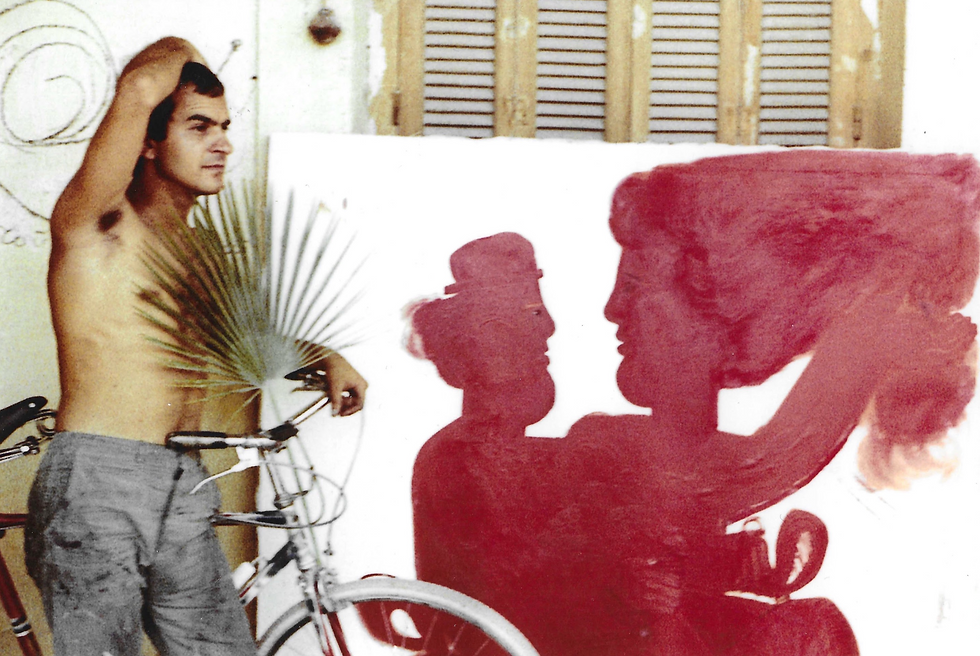
Alekos Fassianos believed in eternity—the eternal nature of humanity, cities, and myths. That nothing truly dies. Everything transforms. He once wrote: ‘Our whole life is a myth. But at least let it be a beautiful one.’ For him, myths weren’t ancient history, but living stories that speak to us now. His art is deeply symbolic: every element has meaning. Myths helped him connect those symbols to a form that people can relate to and recognize.
PORTES EDITOR: Your father, Alekos Fassianos, is recognized as an iconic figure in the world of modern Greek art, and his work viewed as a symbol of modern Greek identity. What do you believe made his art so deeply rooted in Greek culture?
VIKTORIA FASSIANOU: The core of his inspiration was Greece itself. He drew from Greek antiquity—the profiles on ancient vases, the museums he visited. You see this in how he captured those side profiles, an ancient motif. But also, he was inspired by the Mediterranean and Athens—the neighborhoods, the small coffee shops, churches, and nature like bees and the Cycladic Sea.
His work often featured an “eternal hero." Mythological figures placed in a timeless space—you’re never sure if it’s past or present—inviting viewers to relate to them. He was born and bred Greek, and no matter how often he went to Paris, he refused to change his style to fit international trends. When artists told him he hadn’t been influenced by Parisian movements, he’d say, “I didn’t come to Paris to change—I came to bring Greece with me.”
He was also inspired by poets, especially Cavafy. One of his series, The City, explored nostos—the longing for home. Wherever you go, you carry your city in your memories. Fassianos' themes resonated deeply with Greeks because they spoke to shared identity and memory. Plus, he wasn’t exclusive or elitist. He wanted his art everywhere—in cafés, public spaces—not locked away in museums. He believed that to be recognized, you had to be accepted by the people first, the “mob.” All this made him a truly Greek artist.
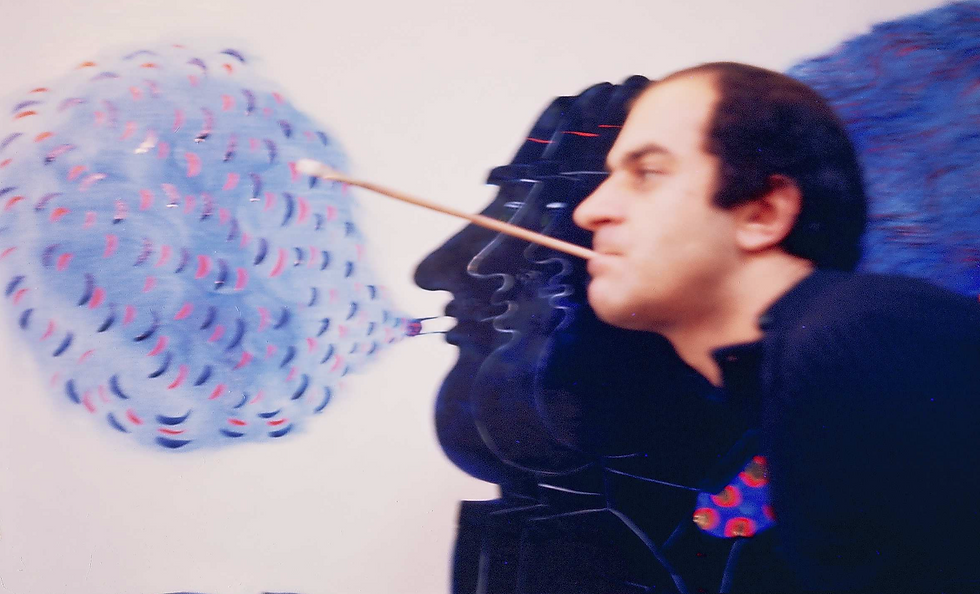
Many of Fassianos’ recurring motifs—windswept hair, lovers, birds, bicycles—emerged in the ’60s and ’70s. How did everyday life inspire his artistic vision and choice of symbols?
Movement fascinated him. He studied ancient sculptures like the Kouros, one of the first to show movement with one foot forward. He tried to capture that same sense of motion—the way wind blows hair, scarves flutter. It’s about turbulence and balance, not just the Cycladic breeze.
He was an artist of all senses. You see watermelons, and you want to taste them. You see wind and feel it. The bicycle, for example, symbolizes freedom and movement. He loved watching cyclists ride along southern Athens by the sea, where there were few cars or trains. He imagined Hermes, the messenger god, on a bike—not just a mythological figure but a representation of anyone who can be a hero. For him, heroes aren’t distant—they’re all of us.
His palette of rich reds, deep blues, and golds is striking. What feelings do you believed these colors evoke?
Fassianos actually created many of his own colors. He was inspired by an old woman in Athens who painted pavement designs by mixing dust with glue. His colors are unique and identifiable because of that. He was a master colorist and chose colors deliberately. He avoided dark or sad tones—no blacks or grays—because he focused on the bright side of life: strength, heroism, joy. Red, for example, was the color of life and power, not blood or violence. His work celebrates life, love, and vitality. The colors bring energy and optimism. His paintings aren’t somber, but celebratory.


Mythology seems central to artwork created by Fassianos. How did Greek myths continue to inspire him throughout his life?
He believed in eternity—the eternal nature of humanity, cities, and myths. He believed that nothing truly dies. Everything transforms. He once wrote, “Our whole life is a myth. But at least let it be a beautiful one.” For him, myths weren’t ancient history, but living stories that speak to us now.
Mythological characters are symbols for the human condition—dualities like god and human, heroic and everyday. His art is deeply symbolic: every element has meaning. Myths helped him connect those symbols to a form that people could relate to and recognize.
How did Fassianos’ groundedness and closeness to everyday life influence his art?
He was very humble. He said he didn’t want to be an artist only for museums but for people’s homes, cafés, and daily life. That’s why he worked with magazines, theaters, and painted on furniture, ceramics, even bottles. He wanted to democratize art, make it accessible, not elitist.
People loved him because he was one of them. He spoke like them, lived like them—going to the same café, eating at the same tavern, rooted in his neighborhood. His art was an extension of his life.

It was magical growing up in his house—like living inside a painting or a myth. Every wall, door, and object had art on it. There was no separation between life and art. You’d open a drawer and find drawings inside. He painted curtains, light switches, and garden pots. Growing up there taught me that art isn’t distant or difficult—it’s part of how you see the world. Even if I don’t paint, I carry that perspective: finding beauty in everyday things.
WORDS | VIKTORIA FASSIANOU
IMAGES | ALEKOS FASSIANOS ESTATE


