


GREECE: DIALING YOUR NUMBER

Young woman using a Tamura Device (Red Telephone) at a Kiosk, 1972
Our daily life—as well as our future—as far as we can imagine it—is shaped by communication technology. Speed, virtual reality, networks, artificial intelligence—all contribute to connectivity. Communication and connection remain a timeless system rooted in imagination.
The Hellenic Telecommunications Organization (OTE) was founded in October 1949. Until then, the country’s telecommunications needs were served by various services and companies: the PTT (Post, Telegraph, Telephone), the AETE (Anonymous Hellenic Telephone Company), and Cable & Wireless (for international telegraphy). At the time of OTE’s founding, phone density stood at 1 per 100 inhabitants—the lowest rate in Europe—while Italy had 2.2 and Sweden 21.6. In 1950, the Athens area had 43,290 automatic connections in operation, while the provinces had 19,818.
Within a decade, Athens had reached 102,601 automatic connections (an increase of 137%) and the provinces 46,271 (an increase of 133%). Through successive five–year plans, OTE strove—and managed—throughout the 1950s and 1960s to expand long–distance and automatic telephony to both urban centers and regional areas. By 1968, 90% of the long–distance network had been automated. Five years later, in 1973, 20.5 out of every 100 inhabitants in Greece had a telephone, placing the country third in Europe in telephone density. The rapid increase in subscribers (from 167,000 in 1960 to 869,451 in 1970 and over 2.5 million by 1980) shows that the telephone had transformed from an elite privilege into a shared public good.
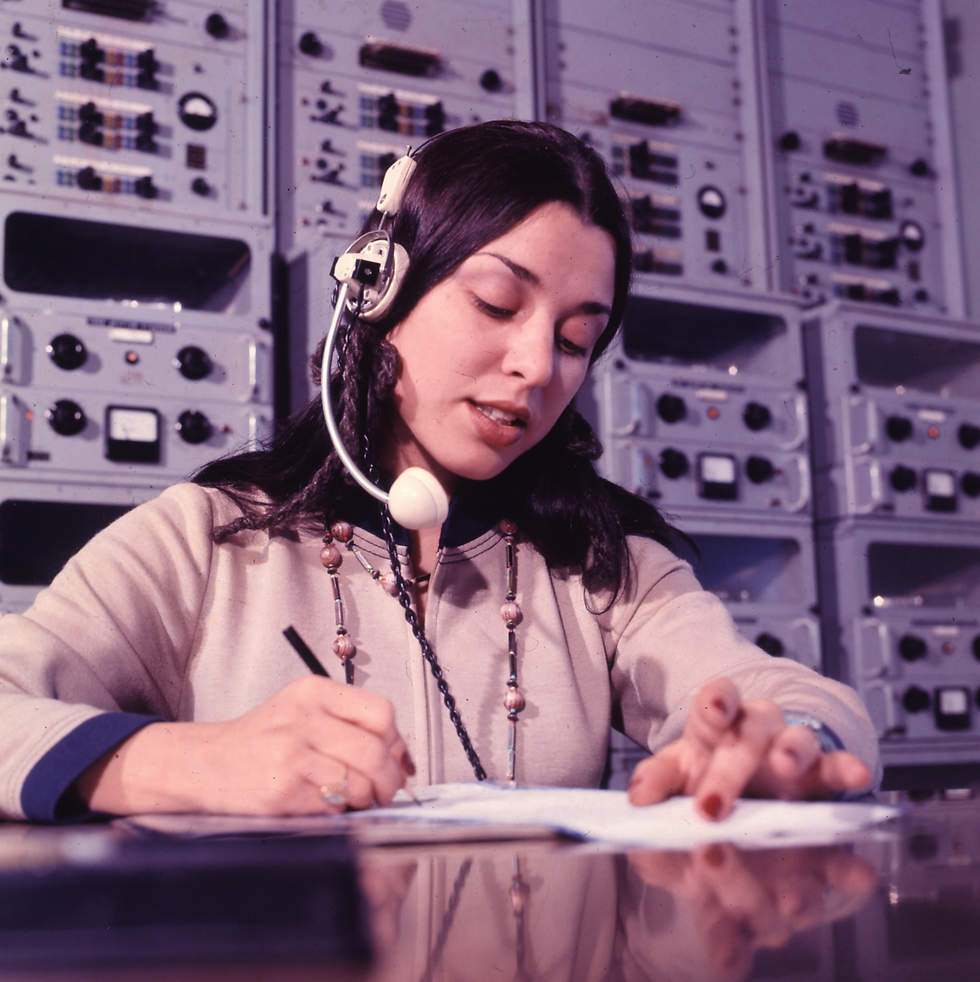
What do these numbers mean for citizens’ daily lives? It’s hard to imagine life today without immediate communication, as we all carry a mobile phone in our hands at all times. But in the 1950s and 1960s, the telephone was far from a given service, and privacy in conversations was not a given either, since telephony was more of a public than a private matter. As old black–and–white Greek films of the era show, the telephone was a topic of neighborhood conversation. People made calls from corner stores (bakalika) and kiosks (periptera), and long lines formed outside the few phone booths in the cities. Communication was even more difficult for residents in rural areas.
One testimony from the 1950s recounts: “For someone from Preveza to make a long–distance call, say to Athens, he had to wait two or three hours at the OTE office phone booth in Preveza, and I, in turn, had to wait another four to five hours in the phone booths on Sofokleous Street, which at the time was the long–distance call center in Athens. It was a situation that today we can truly call primitive.”
Fos, Nero, Tilefono, Oikopeda me Doseis (Light, Water, Telephone, Land Plots on Installments) was the title of a 1966 Greek film that satirized the scarcity of telephone service in the provinces. The telephone emerged as a symbol of economic development. Reaching even the most remote village or household with telephone access became a sign of the country’s modernization.
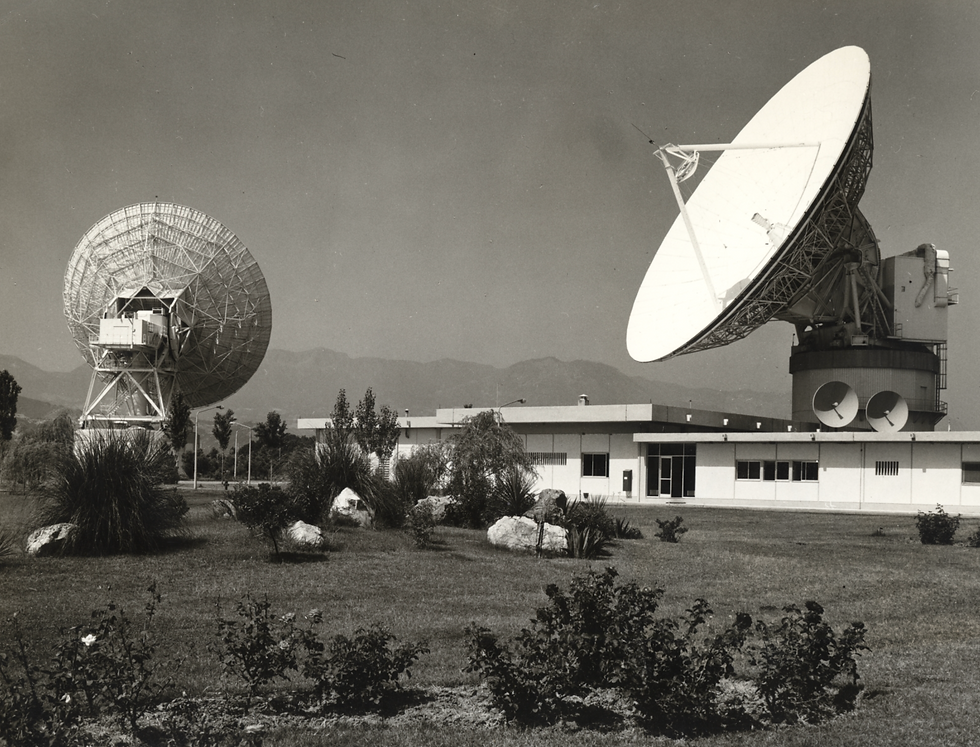
At the same time, major telecommunications projects—such as the Thermopylae Earth Satellite Station (1970) and the construction of international networks (submarine cables and radio relay links)—positioned Greece as a telecommunications hub in the Eastern Mediterranean. Shipping capital, as well as the mass migration of the 1960s, were key drivers that intensified demand for expanded international communication.
WORDS | NIKOLETTA LIAKOSTAVROU
IMAGES | OTE GROUP TELECOMMUNICATIONS MUSEUM


